
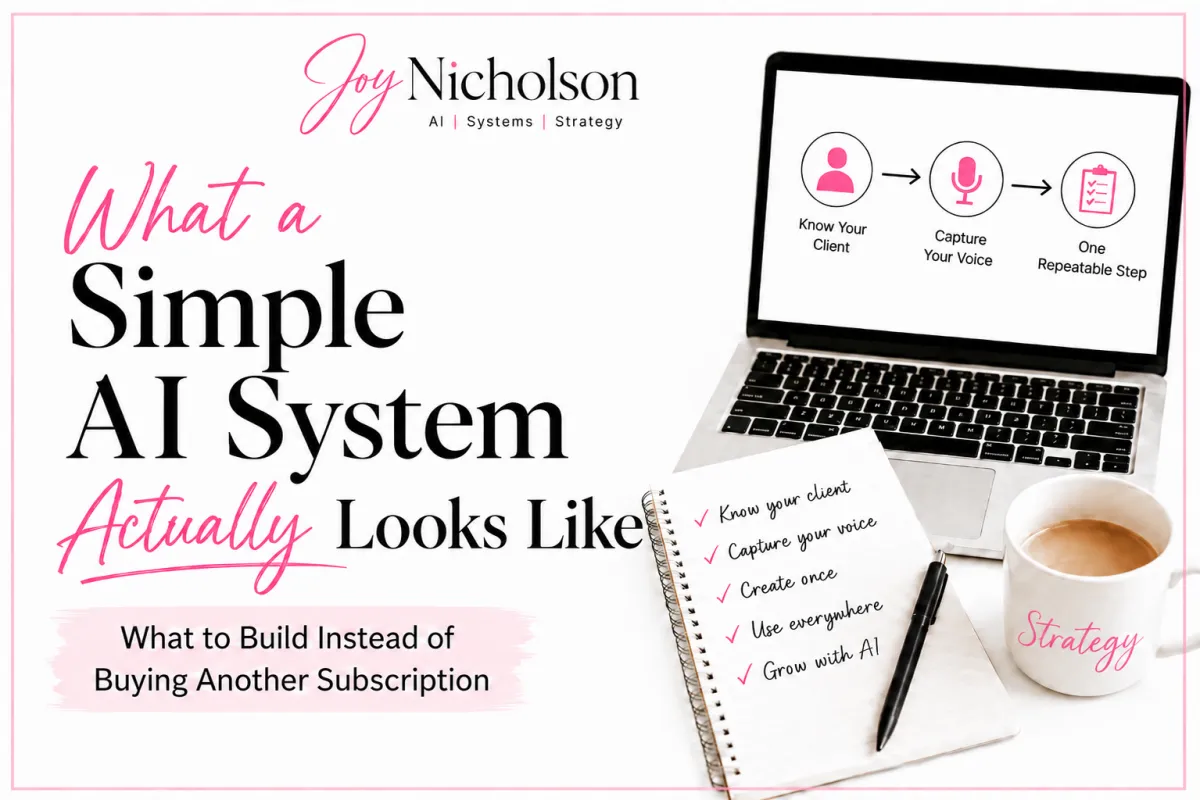
What a Simple System Actually Looks Like
What to Build Instead of Buying Another Subscription or Unnecessary Tokens
Last week I told you the tools were not the problem. This week, the answer.
A couple of years ago I stood in a town called Texarkana.
It is one town with a line running straight down the middle of it. One side is Texas. The other side is Arkansas. Two states, two sets of rules, one main street sitting right on the border between them.
You can stand with one foot in each state at the very same time. So I did. One foot in Texas, one foot in Arkansas. Technically in two places at once, and properly settled in neither.

And that is exactly how a lot of small business owners are using AI right now.
One foot in "I will just wing it and figure it out each time." One foot in "maybe the next tool I buy will be the one that finally saves me." Standing on the line. Half in, half out. Belonging to neither side.
It feels like you are covering your bases. It is actually the most tiring place a person can stand.
Last week I said it plainly. You do not have an AI problem. You have a system problem. And a system is really just choosing a side. It is stepping off the line and into the state where you have done the thinking, written it down, and stopped starting from zero every single time.
So this week, the obvious follow up. What does choosing that side actually look like?
Let me show you.
A system is not a tool
Here is the thing most people get wrong. They hear the word "system" and picture something complicated. Dashboards. Automations. A flowchart with forty arrows and a man in a headset somewhere making it all work. They assume a system means more tech, more setup, more things to learn at 10pm when they should be asleep.
The good news is. It does not. So you can go to sleep instead of being in front of your laptop when the house is sleeping.
A system is just the thinking and the steps that sit around the tool. The tool is the thing you click. The system is everything you decided before you clicked it.
Same laptop, same AI, completely different result
Picture two people sitting down to write a piece of content. Same laptop. Same AI. Same coffee, probably going cold.

The first one opens ChatGPT and types "write me a post about my business." Out comes beige internet soup. They do not love it, so they tweak it. Then tweak it again. Forty minutes later they have something that sounds like every other small business on the internet, and they are quietly wondering if they are just bad at this.
They are not bad at this. They are working without a system.
The second person opens the same tool and has a draft that sounds like them in about two minutes. Not because they are smarter. Because they did the thinking once, a while back, and now they are not starting from a blank page every single time.
That is the whole difference. And a simple system is really only three things.
A system is everything you decided before you clicked the button. That is why two people with the very same tool can get completely different results.
A simple system is only three things
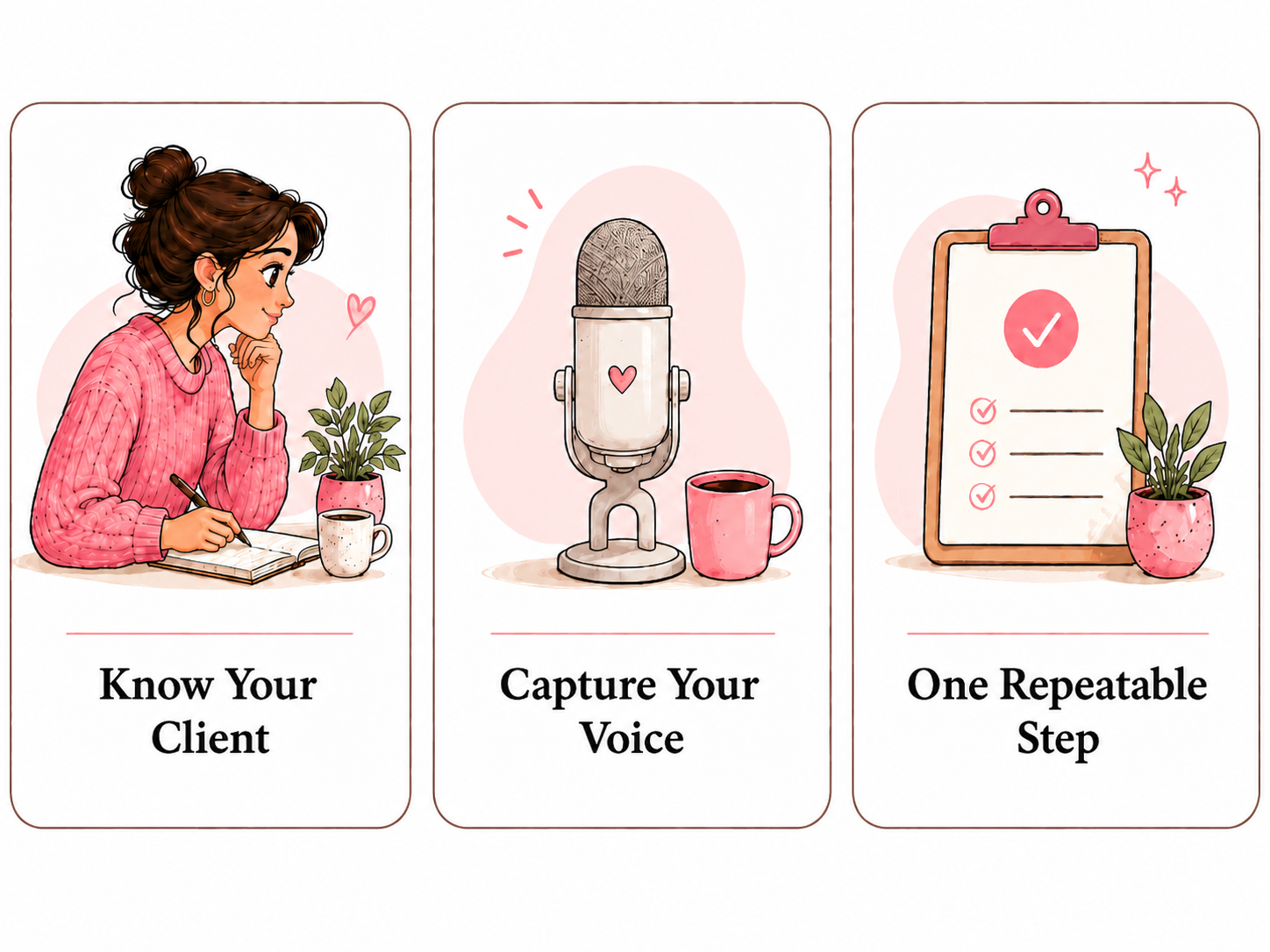
The first is clarity about who you are talking to. Not "small business owners" or "women aged thirty to fifty." I mean you actually know what keeps your client up at night, what they have already tried, and the exact words they use when they describe the problem. When you know that, the AI is not guessing. It is filling in a shape you already drew.
The second is your voice, captured somewhere it can be reused. Most people carry their voice around in their head and re-explain it to the AI from scratch every time, which is exhausting and never quite consistent. Write it down once. The way you talk. The words you would never say. The rhythm. Then the tool stops sounding like a robot doing a slightly off impression of you.
The third is one repeatable step. A saved prompt. A short checklist. A go-to process you will actually follow. Something you can come back to on a chaotic Tuesday when one kid needs lunch, another needs the wifi password for the third time, and you have nine minutes to write a caption before the next thing.
That is it. Client clarity, captured voice, a repeatable step. No automation degree required.
Notice what is not on that list
Another subscription. A new platform. A course on the tool you bought last month and have opened twice.
Here is the part nobody tells you. The reason you feel behind is not that you are missing a tool. It is that you are doing the thinking fresh every single time, under pressure, while life happens in the background. That is not an AI problem. That is a tired human carrying a job a simple system should be carrying for them.
What it feels like when it clicks
The relief, when it clicks, is real. The blank page stops being scary. The work stops sounding generic. And you get your evenings back, because the thing that used to take an hour now takes ten minutes and actually sounds like you.
You do not need to be more disciplined. You do not need to try harder. You need to do the thinking once, write it down, and stop starting from zero.
So before you buy another tool
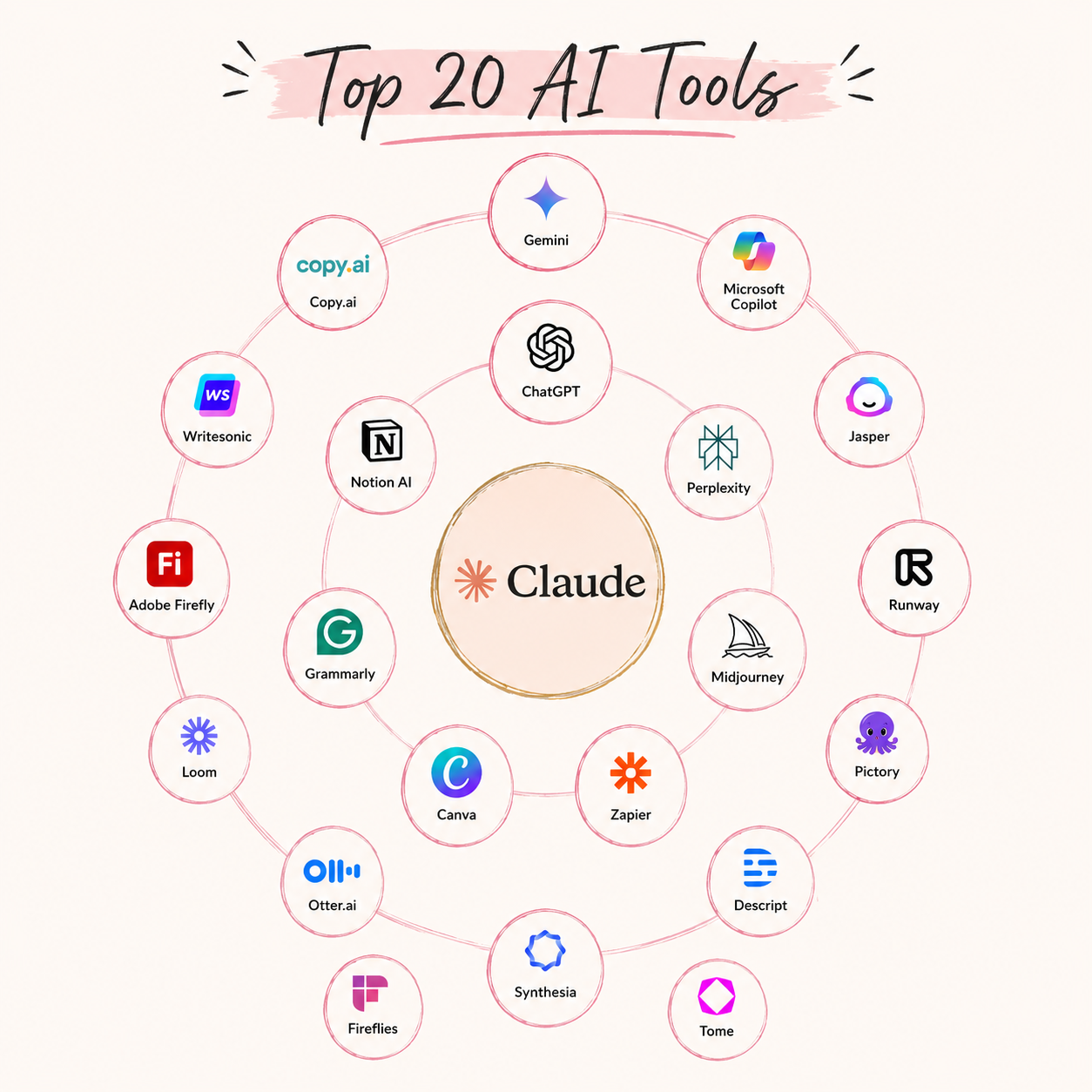
So before you open another tab and sign up for the shiny new thing, ask yourself one honest question. Do I actually need another tool? Or do I just need to decide, once, how I want this done?
What is the one task in your business you keep redoing from scratch every single week?
Ready to step off the line?
This is exactly what we build together in the AI Basics and Marketing Blueprint workshop. A hands-on session where we set up your tools properly, define your brand voice, map your ideal client, and build you a master prompt system you will actually use.
You walk out with a working setup that sounds like you. Not theory. Not templates. Yours.
Book a 1:1 session with me. Spots are limited. https://ai.joynicholson.com/
About the author
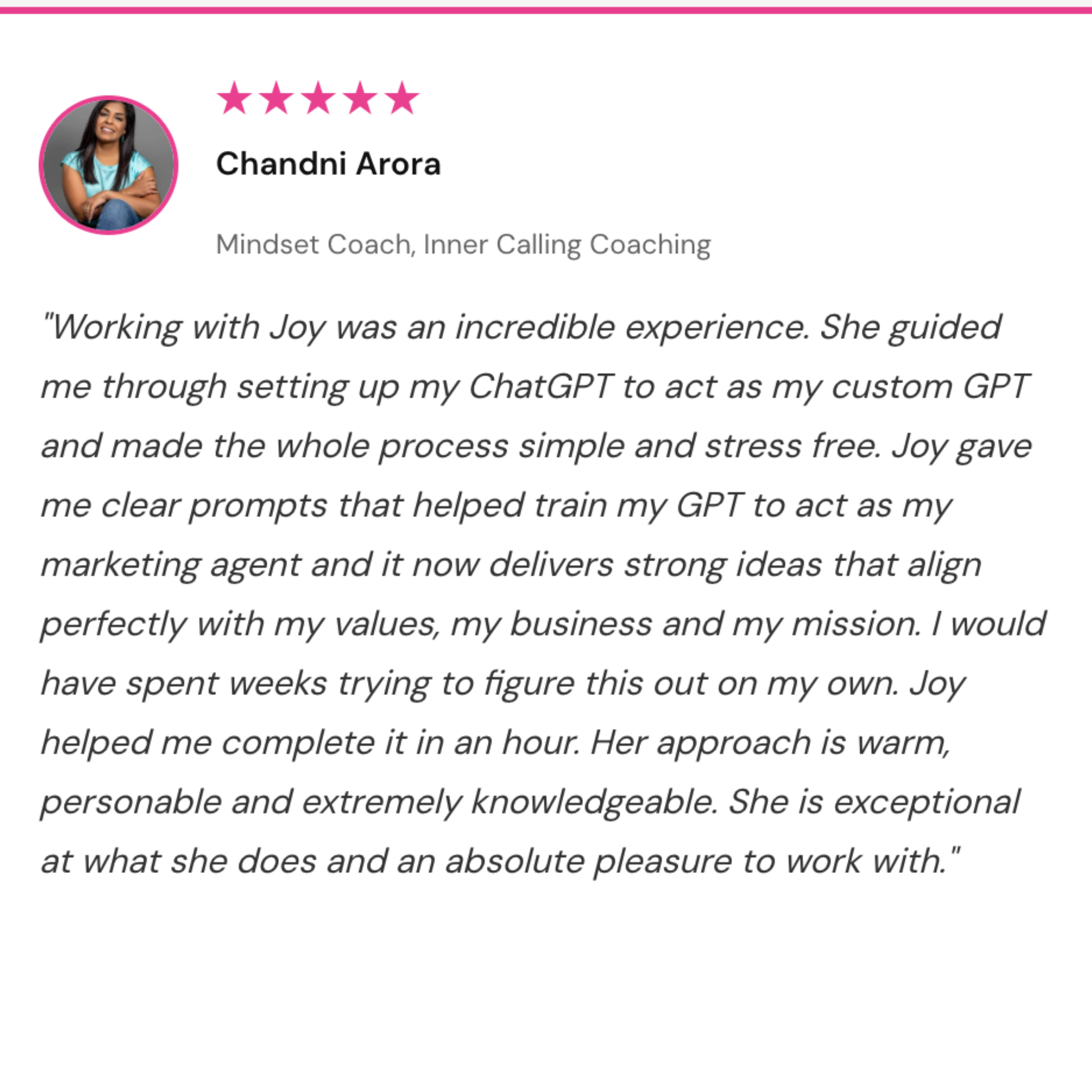
Joy Nicholson is an AI brand voice consultant and educator based on the Sunshine Coast, Australia. She helps small business owners locally and globally build simple AI systems so they can communicate better with clients and run their business without losing their voice. Find her at https://www.joynicholson.com/
GROUP SESSION at a discounted rate coming real soon. Contact me to be placed on the waitlist: https://www.joynicholson.com/contact_us

Frequently Asked Questions
What age are these resources for?
Most of our books and printables work for ages 7-16. We break it down by age range inside each resource. Some families use them younger if their kids are ready. Some use them older if they're just starting. You know your kid best.
Do you have Christian resources?
Yes. Faith matters to us. We have books focusing on biblical wisdom and discernment. We're not preachy, but we're not neutral either. These are made for families who want their kids to think critically and stand firm.
Digital or physical books?
Both. Our main books (Communication Superpowers for Kids and Don't Let AI Raise Your Kids) are on Amazon in paperback. Our printables, workbooks, and curriculum packs are digital downloads. Print them at home or use them on tablets. Whatever works for your family.
What if I don't homeschool?
These work for any family. Homeschool, public school, private school. Doesn't matter. If you want your kids to communicate better and think critically about technology, these are for you.
Which book should I start with?
Start with what's bugging you most. Kids glued to screens? Grab Don't Let AI Raise Your Kids. Want better family conversations? Communication Superpowers. Honestly, both work together beautifully.
Can I share these with my co-op or friends?
These are licensed for single-family use. If your co-op or group wants to use them, reach out. We can sort something out. And heads up: we're launching an affiliate program soon. If you love what we're doing and want to share it, you'll be able to earn while helping other families. Stay tuned.
Books and printables helping families raise thinkers, not robots. AI wisdom, communication skills, and faith-first learning for ages 7-16.