
You Do Not Have an AI Problem. You Have a System Problem
“The most difficult thing is the decision to act; the rest is merely tenacity.” — Amelia Earhart
You Do Not Have an AI Problem. You Have a System Problem.
A 2026 SBE Council (Small Business & Entrepreneurship) survey found small businesses use about five AI tools on average, and most plan to keep investing. But other reports tell a more complicated story. Adoption is still uneven. A lot of owners are hesitating, not because they don't want to use AI, but because it feels complicated, fragmented, and genuinely hard to weave into how they actually work day to day.
Too many tools. Too many tabs. Too many half-built workflows that never quite connect.
Some owners added AI to their business and somehow ended up with more to manage, not less.
Sound familiar?

More tools does not mean more results. It usually means more overwhelm.
The tool is not the strategy.
Here is what nobody tells you when you sign up for your fourth AI subscription of the month: the tool is not the strategy. The tool is just the instrument. What actually changes your business is the system you build around it.
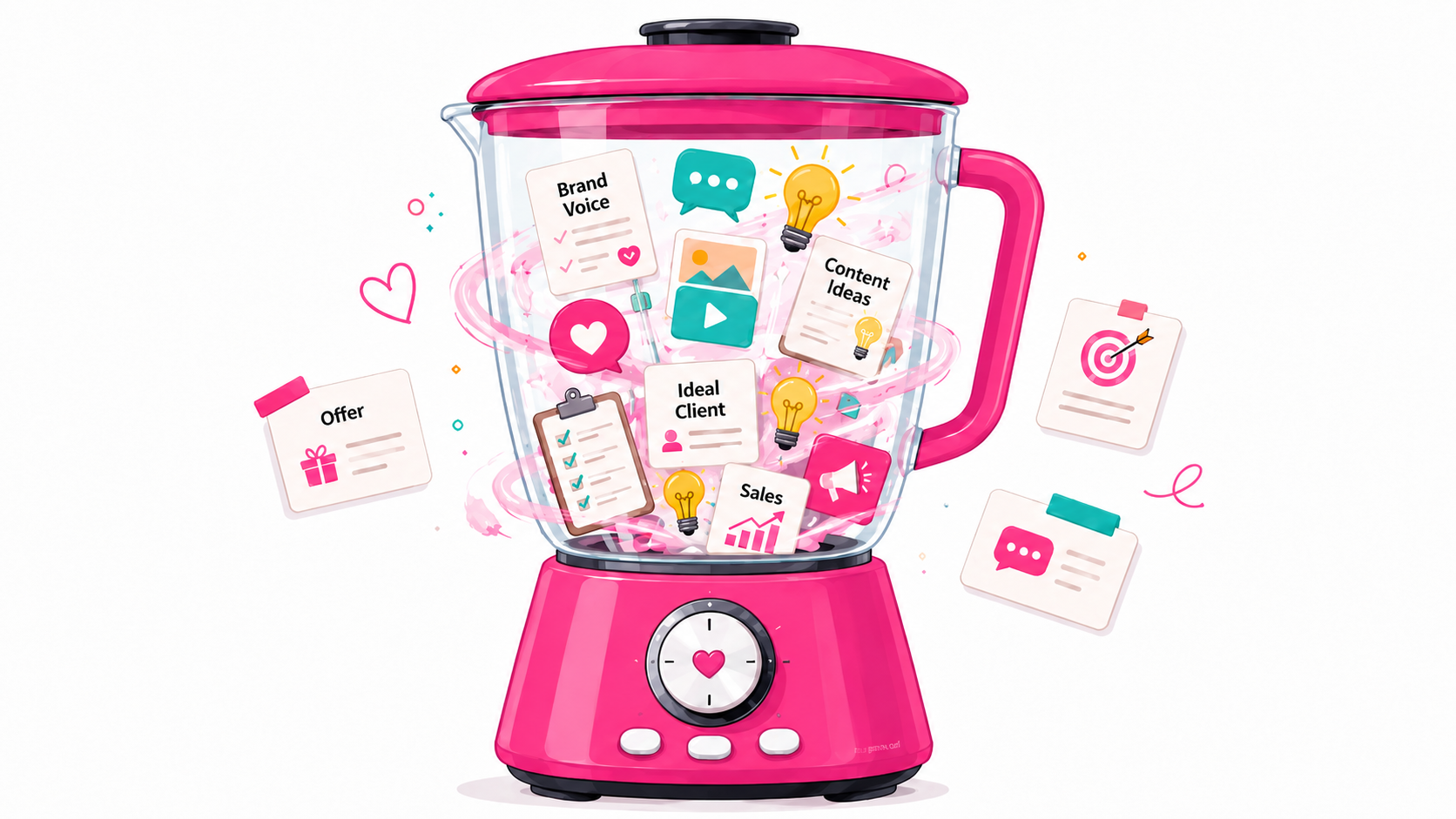
Right now, most small business owners are using AI like a blender they pull out whenever they remember it exists. They type a prompt, get something back, tweak it, use it once, and then forget what they even asked. Next week they start from scratch. The AI has no memory of their business, no sense of their voice, no understanding of who their clients are or what they are trying to say. So every session is a cold start, and the output feels generic because it basically is.
That is not an AI failure. That is a setup failure.
"The businesses pulling real results from AI in 2026 are not the ones with the most tools. They are the ones who went deep on a focused few and built documented, repeatable systems around them."
The entrepreneurs struggling with AI are almost always the ones on their fourteenth new platform and their third AI assistant of the year, running prompts on Tuesday they will not remember on Thursday.
The ones winning? They picked something, learned it properly, and built it into how they work.
So what does AI actually look like when it is working?
It looks like sitting down to write a week of social content and having your AI already know your tone, your offers, your ideal client, and the problems you solve. You give it a direction. It gives you a draft that sounds like you wrote it on a good day. You tweak it in five minutes and you are done.
It looks like responding to a client inquiry and having a prompt saved that generates a warm, professional response in your voice in under a minute. No staring at a blank screen. No agonising over the wording.
It looks like taking a thirty-minute voice note of your ideas and coming out the other side with a blog post, a newsletter, and three social captions. All yours. All consistent. Done before lunch.
AI works beautifully as a production and communication layer. It falls apart when you expect it to replace your thinking.When AI is set up properly, it feels like having a team member who already knows your business.

The content problem is the biggest one.
Marketing is the number one use case for AI among small businesses right now, and for good reason. The content demands on a small business owner in 2026 would have required a full-time marketing team five years ago. Blog posts, emails, social captions, landing pages, client follow-ups. That is a lot for one person running an actual business.
AI can carry most of that load. But only if you have set it up properly.
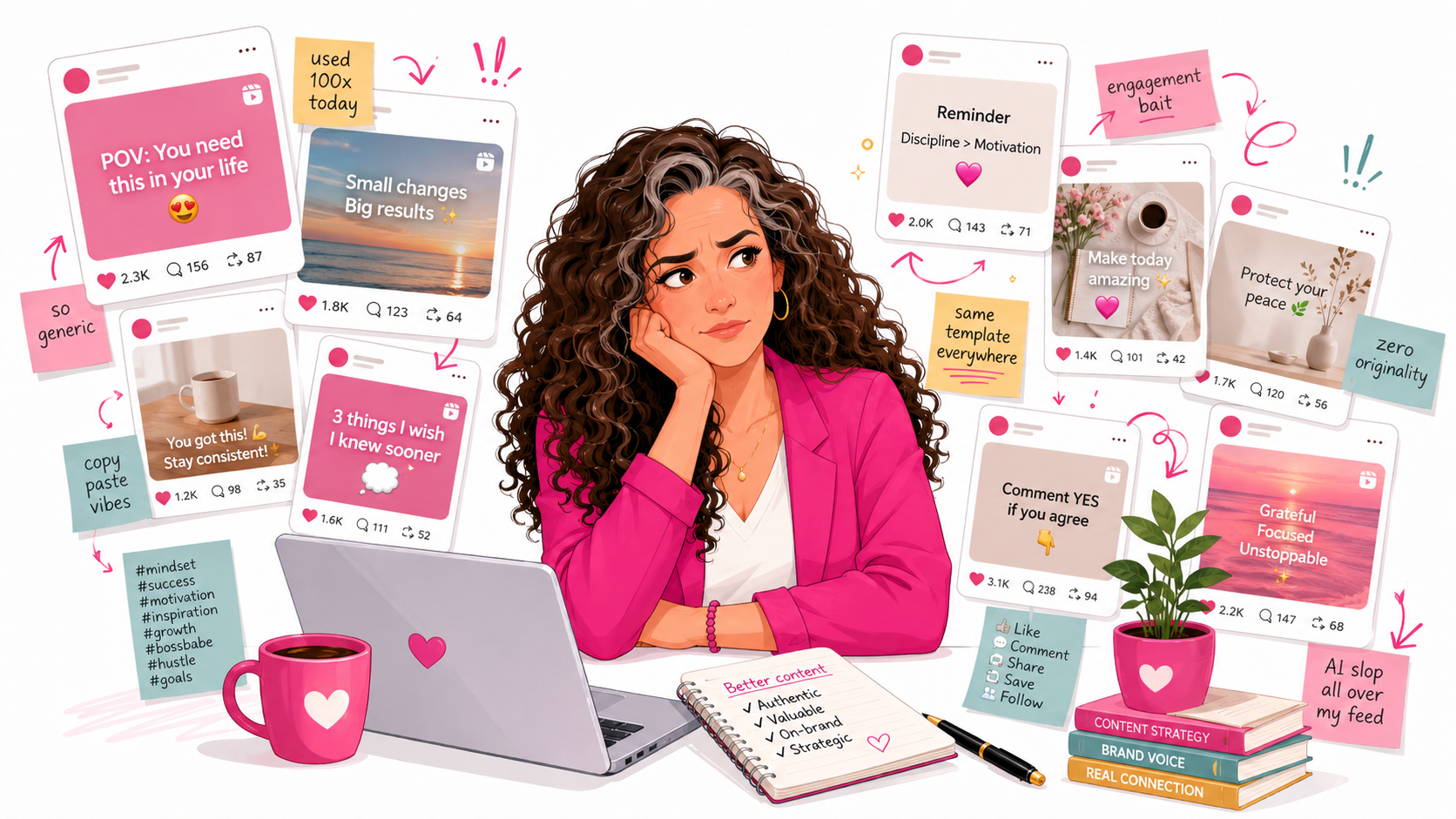
The internet right now is saturated with AI content that looks polished but feels empty. Personally I call it AI SLOP. Businesses that once relied on AI for speed are facing declining trust and lower engagement. The problem is not the tool. It is the missing layer: a clear brand voice, a real understanding of who the client is, and a content system that keeps everything consistent. Without those things, AI just produces more noise. With them, it produces content that actually connects.
That is the shift. From using AI as a shortcut to using AI as a system.
Reality check
Only about 47% of marketers say they understand how to incorporate AI into their strategy, and about 38% say they’ve fully integrated AI into their marketing processes, according to HubSpot’s marketing research and Epsilon’s ‘State of AI in Marketing’ findings.
HubSpot’s 2026 State of Marketing report also suggests that the biggest gains come not from adding more tools, but from redesigning workflows and content systems around how AI actually changes marketing.
The before and after is stark.
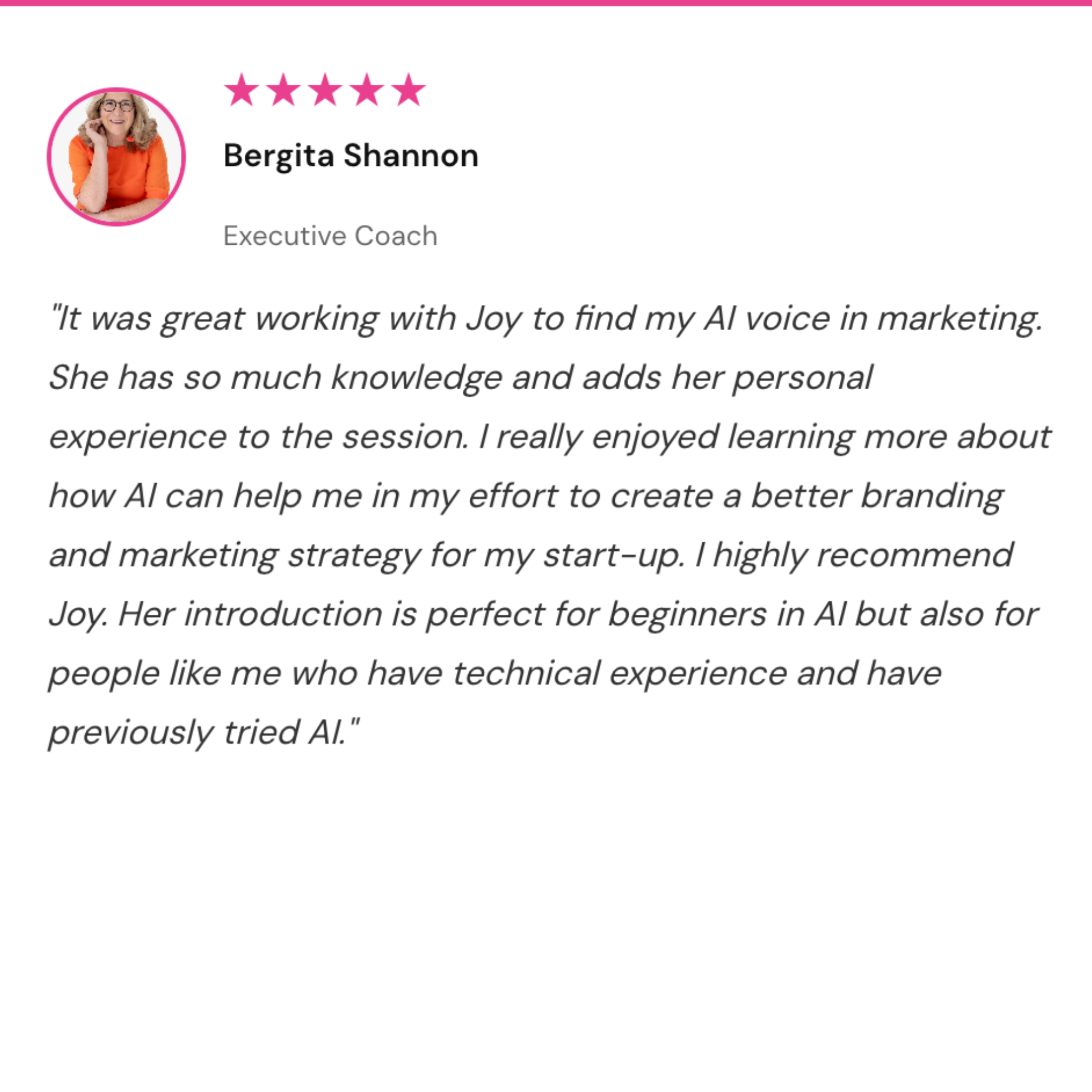
I have been building this for myself, and I have been teaching it to other small business owners on the Sunshine Coast and globally online. The difference is real.
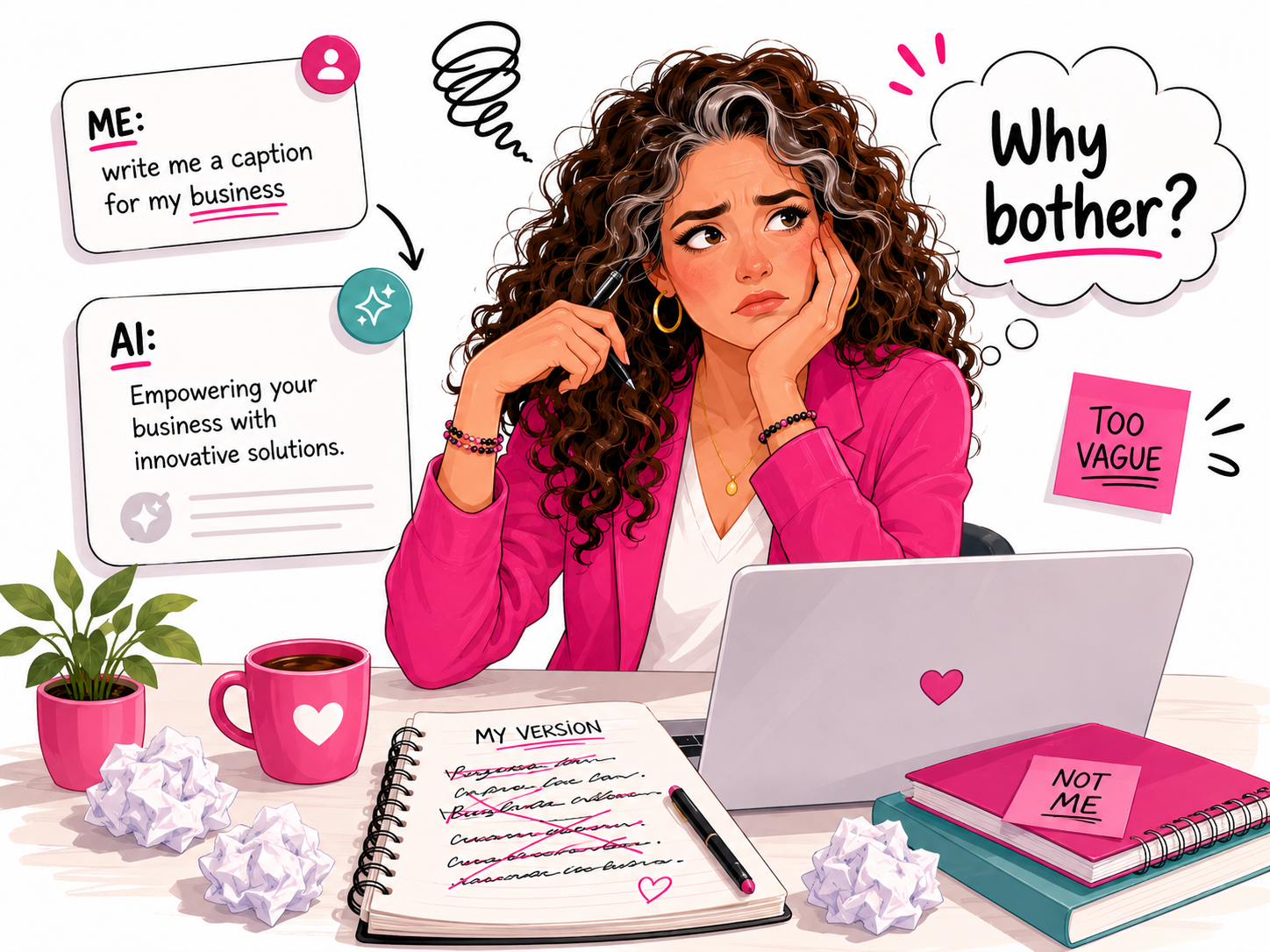
Before: Opening a new AI chat, typing "write me a caption for my business," getting back something vague and a bit corporate, rewriting the whole thing yourself, wondering why you bothered.
After: Opening your AI with a master prompt already loaded, typing "I want to talk about [topic], write me three caption options," and getting back something that actually sounds like you and works.
The difference is not which AI you use. It is whether you have done the setup.
Ready to stop starting from scratch every time?
The AI Basics and Marketing Blueprint workshop is a three-hour, hands-on session in Caloundra for a maximum of ten people. There will also be an online session in July.
We configure your tools properly, define your brand voice, map your ideal client, and build you a master prompt system you will actually use.
You walk out with a working content system that sounds like you. Not theory. Not templates. A setup that is yours.
Only 10 spots available: Book HERE
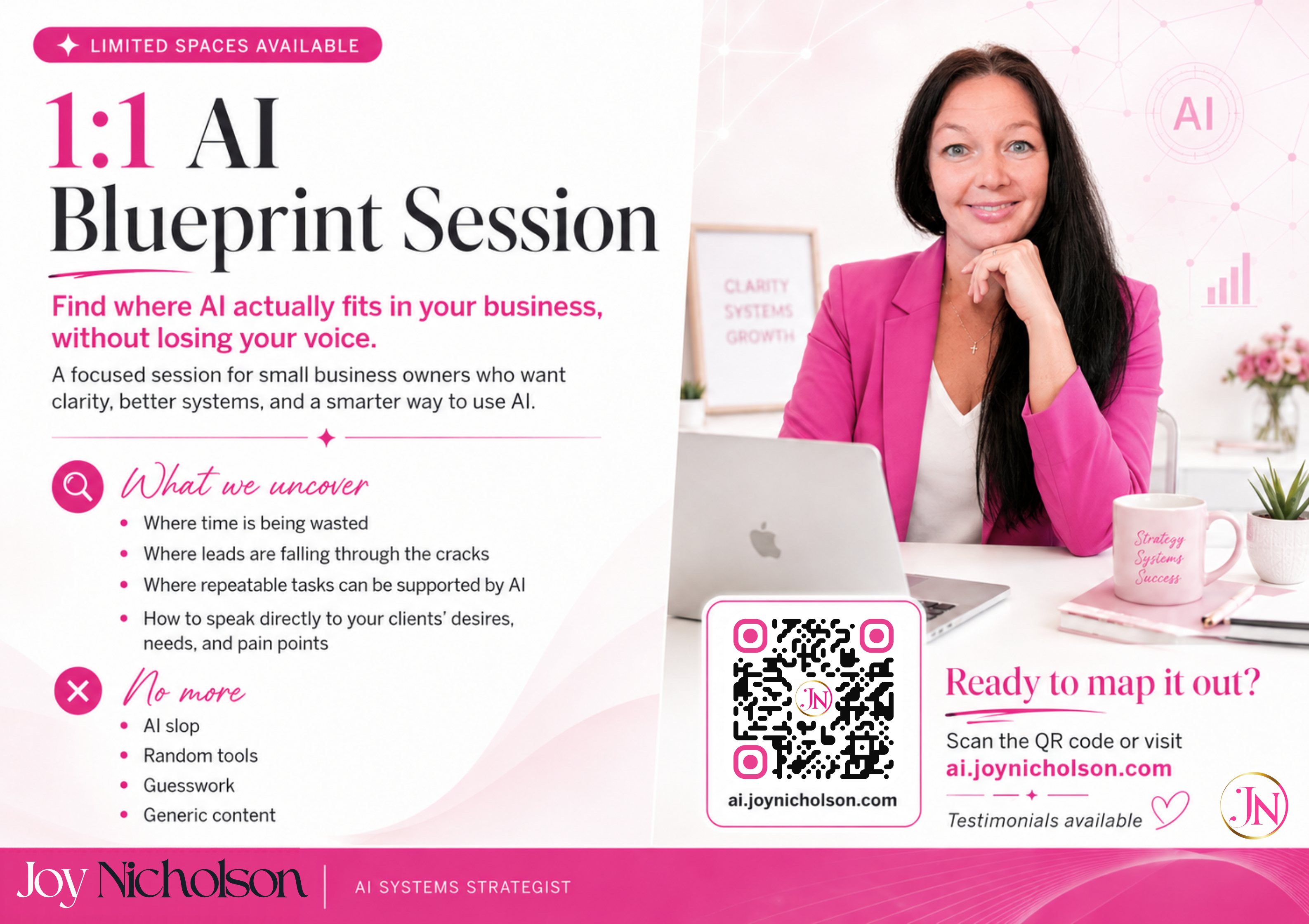
Alternatively book in your 1.1 Session with me. Spots are limited.
About the author
Joy Nicholson is an AI brand voice consultant and educator based on the Sunshine Coast, Australia. She helps small business owners build simple AI systems so they can communicate better with clients and run their business without losing their voice. Find her https://www.joynicholson.com/

Frequently Asked Questions
What age are these resources for?
Most of our books and printables work for ages 7-16. We break it down by age range inside each resource. Some families use them younger if their kids are ready. Some use them older if they're just starting. You know your kid best.
Do you have Christian resources?
Yes. Faith matters to us. We have books focusing on biblical wisdom and discernment. We're not preachy, but we're not neutral either. These are made for families who want their kids to think critically and stand firm.
Digital or physical books?
Both. Our main books (Communication Superpowers for Kids and Don't Let AI Raise Your Kids) are on Amazon in paperback. Our printables, workbooks, and curriculum packs are digital downloads. Print them at home or use them on tablets. Whatever works for your family.
What if I don't homeschool?
These work for any family. Homeschool, public school, private school. Doesn't matter. If you want your kids to communicate better and think critically about technology, these are for you.
Which book should I start with?
Start with what's bugging you most. Kids glued to screens? Grab Don't Let AI Raise Your Kids. Want better family conversations? Communication Superpowers. Honestly, both work together beautifully.
Can I share these with my co-op or friends?
These are licensed for single-family use. If your co-op or group wants to use them, reach out. We can sort something out. And heads up: we're launching an affiliate program soon. If you love what we're doing and want to share it, you'll be able to earn while helping other families. Stay tuned.
Books and printables helping families raise thinkers, not robots. AI wisdom, communication skills, and faith-first learning for ages 7-16.
Curious Kea Publishing
LEGAL
© Copyright 2026. Joy Nicholson . All Rights Reserved.